Quick Facts
- Defining Mid-Mod: A design movement from the 1940s to 1960s characterized by clean lines, floor-to-ceiling glass, and a seamless flow between interior and exterior spaces.
- Iconic Hubs: While spread across the US, the highest concentrations of preserved architectural gems are found in Palm Springs (CA), New Canaan (CT), and Columbus (IN).
- The Investment: Nightly rates for these historic rentals range from an accessible $165 to a luxurious $1,590, with a median price of approximately $407.
- Signature Features: Beyond the architecture, 82% of top-rated mid-mod Airbnbs offer curated nostalgic amenities like vintage record players, sunken conversation pits, and original saltwater pools.
Introduction: Living in a Piece of History
There is a profound difference between staying in a hotel and inhabiting a piece of architectural history. For the design-conscious traveler, a vacation is not merely an escape from the mundane; it is an opportunity to step into a different era—specifically, the golden age of American Modernism. Midcentury-Modern (mid-mod) design, which flourished between the late 1940s and mid-1960s, was never just about furniture; it was a philosophy. It championed clean lines, open floor plans, and expansive floor-to-ceiling windows that dissolved the boundaries between the living room and the natural world.
In today's travel landscape, the "concept stay" has eclipsed traditional lodging. We no longer seek just a bed; we seek an atmosphere. Whether it is the soft glow of a George Nelson bubble lamp or the tactile warmth of walnut paneling, these homes tell stories of a time when architects like Richard Neutra and Eero Saarinen reimagined the American home as a sanctuary of light and air.
A recent analysis of premier midcentury-modern Airbnbs reveals a surprisingly broad nightly price range, starting as low as $165 for minimalist retreats and reaching $1,590 for opulent desert estates. With a median cost of approximately $407, these "livable museums" are increasingly accessible to those who value design integrity over standard luxury. From the arid landscapes of Palm Springs to the lush forests of New Jersey, these 11 properties offer an immersive journey into the heart of modernism.
1. The Serpentine 'Wave' — Lambertville, New Jersey
Hidden within the verdant woodlands of New Jersey lies a home that feels less like a building and more like a sculpture. Designed in 1960 by the renowned Jules Gregory, the "Wave House" is a masterclass in organic modernism. The home’s defining feature is its undulating serpentine roof, which mimics the rolling hills of the surrounding landscape.
Inside, the experience is purely sensory. The double-height living area features floor-to-ceiling glass that frames the forest like a living canvas. For those who appreciate the social rituals of the 1960s, the sunken game room offers the perfect setting for an evening of vinyl and martinis. It is a rare opportunity to live inside the mind of a master who believed that architecture should breathe with its environment.
Design Fact Sheet
- Architect: Jules Gregory (1960)
- Key Feature: Double-hyperbolic paraboloid roof
- Location: Lambertville, New Jersey
- Price: Starting at ~$466/night
2. Classic Desert Opulence — Palm Springs, California
If there is a spiritual home for midcentury modernism, it is undoubtedly Palm Springs. Here, the "Desert Modern" style reached its zenith, and this Charles Dubois-designed masterpiece is its crown jewel. Dubois was famous for his "Swiss Miss" A-frames and high-desert luxury, and this property epitomizes the indoor-outdoor lifestyle that defines the region.
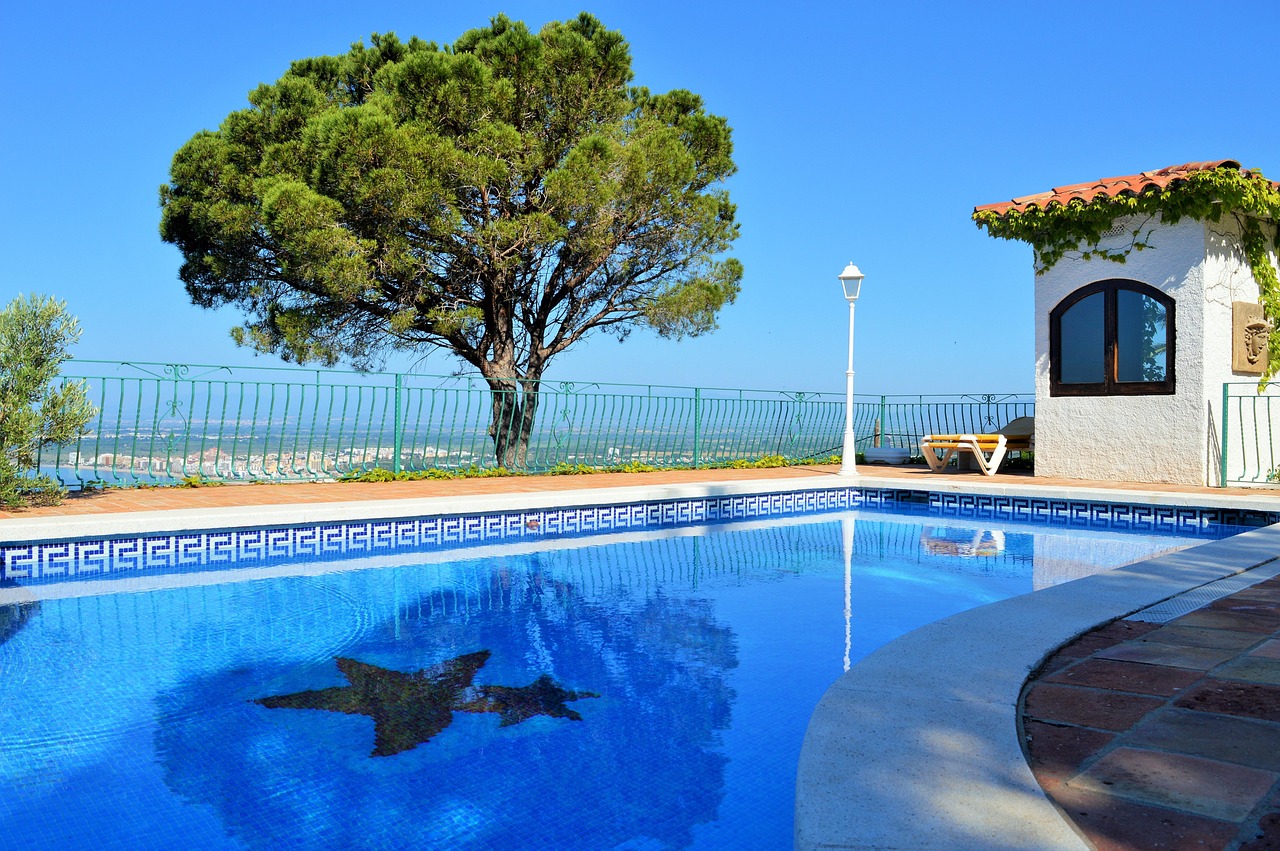
The home is a symphony of Danish vintage interiors and period-correct details. Outside, a private saltwater pool is framed by a backyard misting system—a necessity for the California heat—and a meticulously manicured landscape of palms and cacti. It is the quintessential Mad Men fantasy brought to life, offering a level of privacy and sophistication that even the finest boutiques struggle to match.
Design Fact Sheet
- Architect: Charles Dubois
- Key Feature: Saltwater pool and Danish vintage furnishings
- Location: Palm Springs, California
- Price: Starting at ~$1,590/night

3. The Japanese-Inspired Oasis — Wappinger Falls, New York
Modernism often looked to the East for inspiration, and this retreat in Wappinger Falls is a stunning example of that cross-cultural dialogue. Situated on seven private acres, the home features a dramatic curved beam roof and ethereal paper lanterns that cast a soft, romantic glow throughout the open-plan interior.
The residence serves as the perfect base for a "design pilgrimage" in the Hudson Valley. You are moments away from Dia Beacon and Storm King Art Center, making this stay as much about the surrounding culture as it is about the architecture. The minimalism here isn't cold; it’s a warm invitation to disconnect and observe the changing light through the expansive glass walls.
Design Fact Sheet
- Design Influence: Japanese-American Fusion
- Vibe: Zen-like seclusion and organic textures
- Location: Wappinger Falls, New York
- Price: Starting at ~$350/night
4. The Wright-Inspired Time Capsule — Manitowoc, Wisconsin
Architecture enthusiasts will recognize the hand of a master in this Wisconsin home. Designed by John Bloodgood Schuster, a student of the legendary Frank Lloyd Wright, the house is a "time capsule" of Usonian principles. It sits majestically overlooking the Manitowoc River, utilizing local stone and expansive wood paneling to ground the structure in its site.
The interior remains remarkably preserved, featuring an original stone fireplace that serves as the heart of the home. Staying here feels like a lesson in organic architecture—how a building can emerge from the earth rather than simply sitting on top of it.
Design Fact Sheet
- Architect: John Bloodgood Schuster
- Key Feature: Original wood paneling and cantilevered views
- Location: Manitowoc, Wisconsin
- Price: Starting at ~$275/night
5. Minimalist Warmth — Boise, Idaho
Proving that high design doesn't always require a high price tag, this 1955 build in Boise is a testament to the enduring appeal of minimalist modernism. At approximately $165 per night, it offers one of the best value-to-design ratios in the country.
The home features classic oak floors and an abundance of natural light that reflects off the sparse, carefully curated decor. It is a quiet, unassuming space that captures the "optimistic" spirit of the mid-fifties—a time when design was focused on improving the quality of daily life through simplicity and functionality.
Design Fact Sheet
- Era: 1955 Original
- Vibe: Bright, airy, and unpretentious
- Location: Boise, Idaho
- Price: Starting at ~$165/night
6. The Floating Creek House — El Cerrito, California
For those who want to feel the drama of the landscape, the Floating Creek House is an essential experience. It was designed by Beverly David Thorne, a key contributor to the famed Case Study House program that defined West Coast modernism.
This glass-walled structure is literally built over a running creek, creating a sensory experience where the sound of water becomes a permanent part of the interior ambiance. Thorne used industrial steel and vast sheets of glass to create a home that feels weightless, as if it were hovering above the forest floor.
Design Fact Sheet
- Architect: Beverly David Thorne
- Key Feature: Steel-frame construction over a natural creek
- Location: El Cerrito, California
- Price: Starting at ~$550/night
7. The Eichler-Style Retreat — Beaverton, Oregon
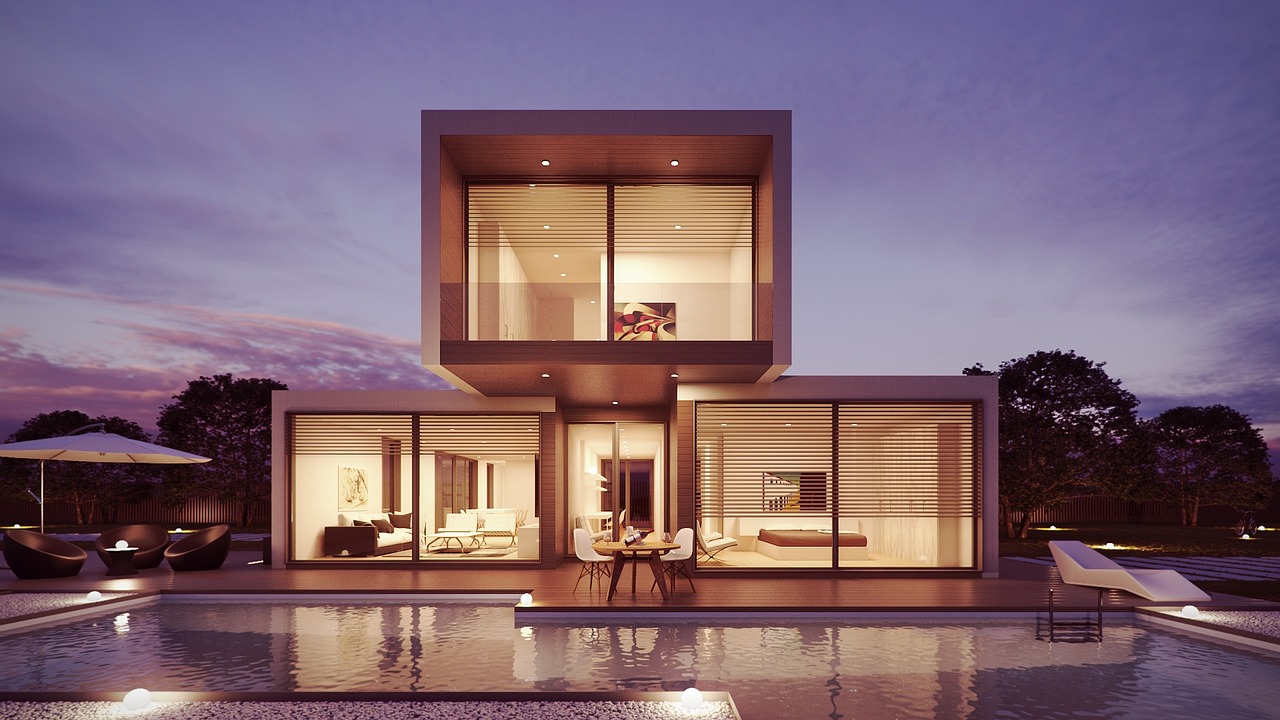
Robert Rummer was the "Eichler of Oregon," bringing the iconic California atrium-style homes to the Pacific Northwest. This 1964 build in Beaverton is a pristine example of his work, featuring a central skylit sunroom that allows residents to enjoy the feeling of being outdoors even during Oregon’s rainy months.
The home flows seamlessly into a Japanese-inspired garden, emphasizing the mid-mod obsession with the "outdoor room." With its post-and-beam construction and radiant-heated floors, it remains a marvel of mid-century engineering and aesthetic grace.
Design Fact Sheet
- Architect: Robert Rummer (1964)
- Key Feature: Interior skylit atrium
- Location: Beaverton, Oregon
- Price: Starting at ~$325/night
8. The Historic 'Daniel House' — Knoxville, Tennessee
Rarely do you find an Airbnb listed on the National Register of Historic Places. The Daniel House, designed by James Fitzgibbons in 1948, is a significant piece of American architectural history. Fitzgibbons, a contemporary of the great modernists, utilized local materials to create a structure that felt both futuristic and deeply rooted in the Tennessee landscape.
The home is a masterclass in the use of vertical space and native stone. For the design lover, staying here is a rare privilege—an opportunity to inhabit a protected landmark that has been lovingly restored to its original glory.
Design Fact Sheet
- Architect: James Fitzgibbons (1948)
- Pedigree: National Register of Historic Places
- Location: Knoxville, Tennessee
- Price: Starting at ~$400/night
9. The A-Frame with the Sunken Pit — Michigan City, Indiana
Nothing says "1960s socialite" quite like a sunken conversation pit. This A-frame home in Michigan City, designed by Ken Fryer, is built entirely around the concept of gathering. The pit, upholstered in plush textures and centered around a fireplace, is the ultimate focal point for long conversations.
The hosts have leaned into the nostalgia, providing an extensive record player collection and vintage board games. It is a playful, evocative space that reminds us that mid-mod design was intended to foster human connection and intimacy.
Design Fact Sheet
- Architect: Ken Fryer
- Signature Element: Sunken conversation pit
- Location: Michigan City, Indiana
- Price: Starting at ~$380/night
10. Villa Pinea: The Forest Loft — Durham, North Carolina
Designed by Terry Waugh, a prominent figure in North Carolina's modernist movement, Villa Pinea is a 12-acre forest sanctuary. The home is defined by its dramatic cantilevered decks and its deep respect for the surrounding pines.
A stay here also serves a greater purpose; the property supports the North Carolina Botanical Garden. It is the perfect marriage of luxury, design, and environmental stewardship, offering a secluded "loft" experience where the trees feel like your only neighbors.
Design Fact Sheet
- Architect: Terry Waugh
- Vibe: Woodland seclusion and architectural loftiness
- Location: Durham, North Carolina
- Price: Starting at ~$295/night
11. The Stenger Masterpiece — Austin, Texas
AD Stenger was the architect who defined the "Austin Look" in the 1950s. This specific property is a bold, colorful celebration of his style. Unlike some of the more muted modernist homes, this Stenger masterpiece utilizes vibrant hues, Smeg appliances, and a heated pool to create a space that feels energetic and contemporary.
It is ideally suited for larger groups who want a design-centric home base while exploring the creative energy of Austin. It maintains all the classic mid-mod hallmarks—clerestory windows and an open floor plan—but injects them with a uniquely Texan sense of playfulness.
Design Fact Sheet
- Architect: AD Stenger
- Key Feature: Heated pool and bold, period-correct palette
- Location: Austin, Texas
- Price: Starting at ~$650/night
Comparative Overview: Midcentury Modern Stays at a Glance
| Property Name | Location | Architect | Nightly Price (From) | Capacity |
|---|---|---|---|---|
| The Serpentine 'Wave' | New Jersey | Jules Gregory | $466 | 6 Guests |
| Classic Desert Opulence | California | Charles Dubois | $1,590 | 8 Guests |
| The Japanese Oasis | New York | N/A | $350 | 4 Guests |
| The Daniel House | Tennessee | James Fitzgibbons | $400 | 4 Guests |
| Minimalist Warmth | Idaho | N/A | $165 | 4 Guests |
| Stenger Masterpiece | Texas | AD Stenger | $650 | 10 Guests |
Where to Find Midcentury Modern Architecture
While the Airbnbs listed above offer a private experience, true design lovers often extend their trips to explore the broader context of these architectural hubs. If you are planning a "design tour," these three locations are non-negotiable:
- Palm Springs, California: The epicenter of the movement. Every February, the city hosts Modernism Week, a festival celebrating its unique concentration of midcentury homes by Donald Wexler, Richard Neutra, and Albert Frey.
- New Canaan, Connecticut: Home to the "Harvard Five," including Philip Johnson. His famous Glass House is a pilgrimage site for anyone interested in the purity of modern form.
- Columbus, Indiana: A small Midwestern city that became an unlikely mecca for modernism. Thanks to the patronage of J. Irwin Miller, the city features works by Eero Saarinen, I.M. Pei, and Richard Meier.
"A house is a machine for living in," Le Corbusier famously said. But these midcentury homes prove that a house can also be a vessel for dreams, a playground for light, and a timeless testament to human creativity.
FAQ
How do I know if an Airbnb is a "true" Midcentury Modern home? Look for specific architectural markers: post-and-beam construction (which allows for wide-open spaces), clerestory windows (narrow windows high on the wall), and a strong emphasis on "indoor-outdoor living." True gems will often credit a specific architect or mention their inclusion on local historic registries.
Are these historic homes suitable for families? Many are, but be mindful of the "museum" quality of the interiors. Sunken pits, open staircases, and vintage furniture require a level of care. Always check the house rules regarding children and pets, as some owners of highly preserved homes may have age restrictions to protect the architecture.
When is the best time to book a mid-mod stay in Palm Springs? Palm Springs is most popular (and expensive) during the winter and spring months. To experience the design scene at its peak, book during Modernism Week in February, but be prepared to book at least six months in advance.
Your Design Journey Awaits
Whether you are a professional architect or simply someone who appreciates the clean lines of a well-placed Eames chair, staying in a midcentury-modern Airbnb is a transformative experience. These homes invite us to slow down, to notice the way shadows move across a terrazzo floor, and to appreciate the enduring elegance of a well-designed space.
Ready to book your architectural retreat? Each of these homes offers more than just a place to sleep—they offer a portal to a more stylish, thoughtful way of living.