2024 Fashion E-commerce Report: Top Strategies to Boost Conversion Rates and Growth
The digital runway is more crowded than ever, yet for those who master the nuances of the 2024 landscape, the rewards are monumental. As we navigate a year defined by shifting consumer sentiments and rapid technological integration, one thing remains certain: fashion continues to be the undisputed heavyweight champion of global e-commerce.
The $153.6 Billion Opportunity
Why is the industry watching so closely? Currently, apparel and footwear account for a staggering 20.2% of all online purchases in the US alone. With the global market valuation projected to hit new heights by late 2024, the "window of opportunity" is wide open for brands that can pivot from traditional sales tactics to high-engagement, data-driven experiences.
01. Designing for the 'Cozy' Consumer: UX and Visual Appeal

In 2024, the digital storefront is no longer just a catalog; it is an extension of the consumer’s sanctuary. This image perfectly captures the "at-home browsing" ethos—a mustard-yellow knit sweater providing tactile warmth while the user engages with a seamless digital interface.
The Strategy:
- Stunning Design Meets Empathy: Your UX must mirror the comfort your products provide. High-quality lifestyle photography that places the product in a relatable context (like a sunlit home office) increases time-on-site and emotional resonance.
- Intuitive Navigation: Use Retail UX Tools to ensure that the journey from the "cozy" discovery phase to the cart is frictionless.
- Style Note: The oversized knit and relaxed denim look suggests a preference for "soft dressing," a trend that brands should reflect in their visual storytelling to drive 2024 engagement.
02. The Benchmark of Success: Boosting Conversion to 4.07%
While the average e-commerce site struggles to break the 2% barrier, the top-tier fashion performers are hitting a 4.07% conversion rate benchmark. What is their secret?
Key Drivers for 2024:
- Localization: Speaking the customer's language—literally and figuratively. This means local currency, regional sizing charts, and culturally relevant marketing.
- Dynamic Product Presentation: Moving beyond static shots to include short-form video and 360-degree views to provide the "tactile" assurance that online shoppers crave.
03. Minimalist Branding and Product Authenticity
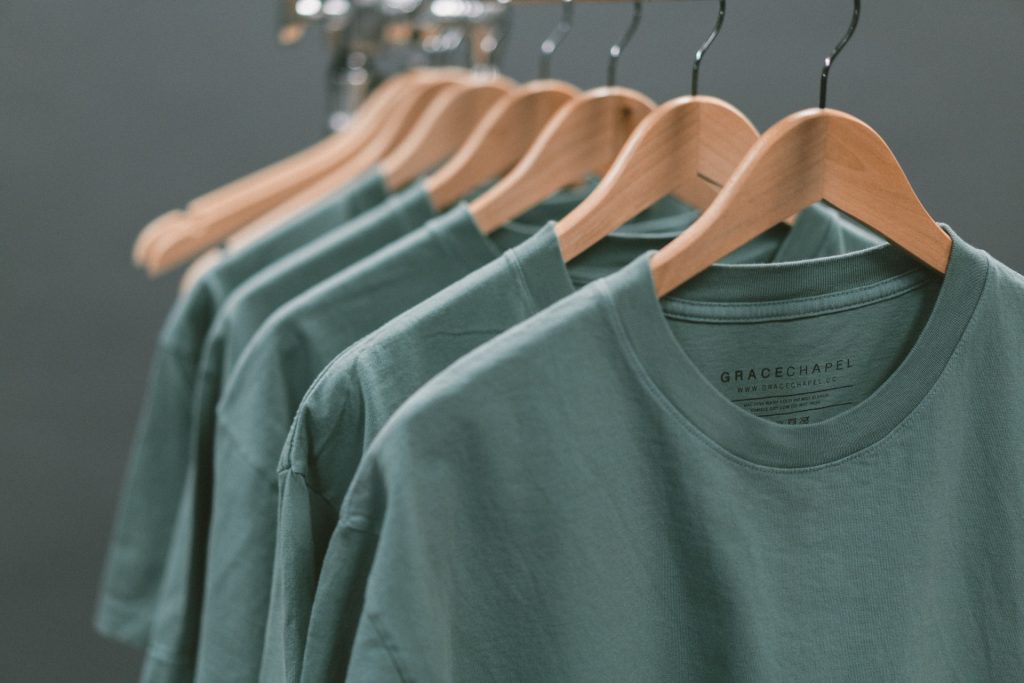
As consumers face "decision fatigue," the industry is seeing a return to minimalism. This collection of olive-green basics on natural wooden hangers speaks to a growing demand for transparency and quality over quantity.
The Strategy:
- Combating Choice Paralysis: Curated collections with clear brand tagging help the customer identify quality quickly. The focus here is on "wardrobe essentials"—high-frequency items that serve as the foundation of a style.
- Visual Search Integration: Implement AI-powered visual search tools. When a customer sees this specific shade of olive, they should be able to find it in your store with a single photo upload.
- Authenticity: Ensure your brand tags and "Made In" labels are prominent. In 2024, the story behind the garment is just as important as the garment itself.
04. Mobile-First & Omnichannel: The New Standard

The line between the "URL" and the "IRL" (In-Real-Life) has officially blurred. As seen in this "Phygital" retail setting, the interaction is driven by mobile technology and instant digital gratification.
The Strategy:
- Mobile-First Imperative: With 66% of fashion sales now occurring on mobile devices, your site must be optimized for thumb-navigation and lightning-fast load times.
- Unified Shopping Experiences: Use advanced Payment Gateway/POS Systems to allow for "Buy Online, Pick Up In-Store" (BOPIS) and seamless mobile checkout.
- Style Insight: Notice the interaction—the tablet is the bridge. Modern retail design should facilitate this tech-enabled human interaction, making the transaction feel like a conversation rather than a chore.
05. Leveraging Social Proof and Social Commerce
The funnel has shortened. In 2024, discovery and checkout often happen within the same sixty seconds on apps like TikTok and Instagram.
- UGC (User-Generated Content): Integrate customer photos directly onto product pages. Seeing a "real" person wearing those olive shirts or that mustard sweater provides the ultimate social proof.
- Influencer Alignment: Move away from celebrity endorsements toward "micro-influencers" who share your brand's specific aesthetic and values, ensuring a higher trust factor and better conversion.
Closing: Future-Proofing for 2025
Success in the final quarters of 2024 requires a delicate balance of high-tech and high-touch. To stay ahead, brands must prioritize:
- AI-Driven Personalization: Serving the right product to the right person at the exact moment they need it.
- The Circular Economy: Integrating "Re-commerce" or trade-in programs to appeal to the eco-conscious Gen Z and Millennial demographics.
- 24/7 Support: Utilizing sophisticated AI chatbots that can provide styling advice and order tracking instantly.
By focusing on a mobile-first, minimalist, and "cozy" consumer experience, you aren't just selling clothes—you're building a tech-forward ecosystem that thrives on trust and efficiency.