The difference between a room that feels "finished" and one that feels "accidental" often comes down to a single measurement: the drop. In the world of interior design, your curtains are the mascara of the room—they frame the view, enhance the height, and set the emotional volume of the space.
Mastering the Art of the Curtain Drop
The distance between your curtain rod and the floor is arguably the most critical measurement in your home. This vertical span, known as the curtain drop length, is measured from the very top of the rod or track down to the bottom edge of the fabric. Whether you are aiming for a crisp, modern finish or a heavy, dramatic overflow, understanding the technical "why" behind the "how" is the first step to professional-grade styling.
The Romantic Puddle: Elegance & Luxury
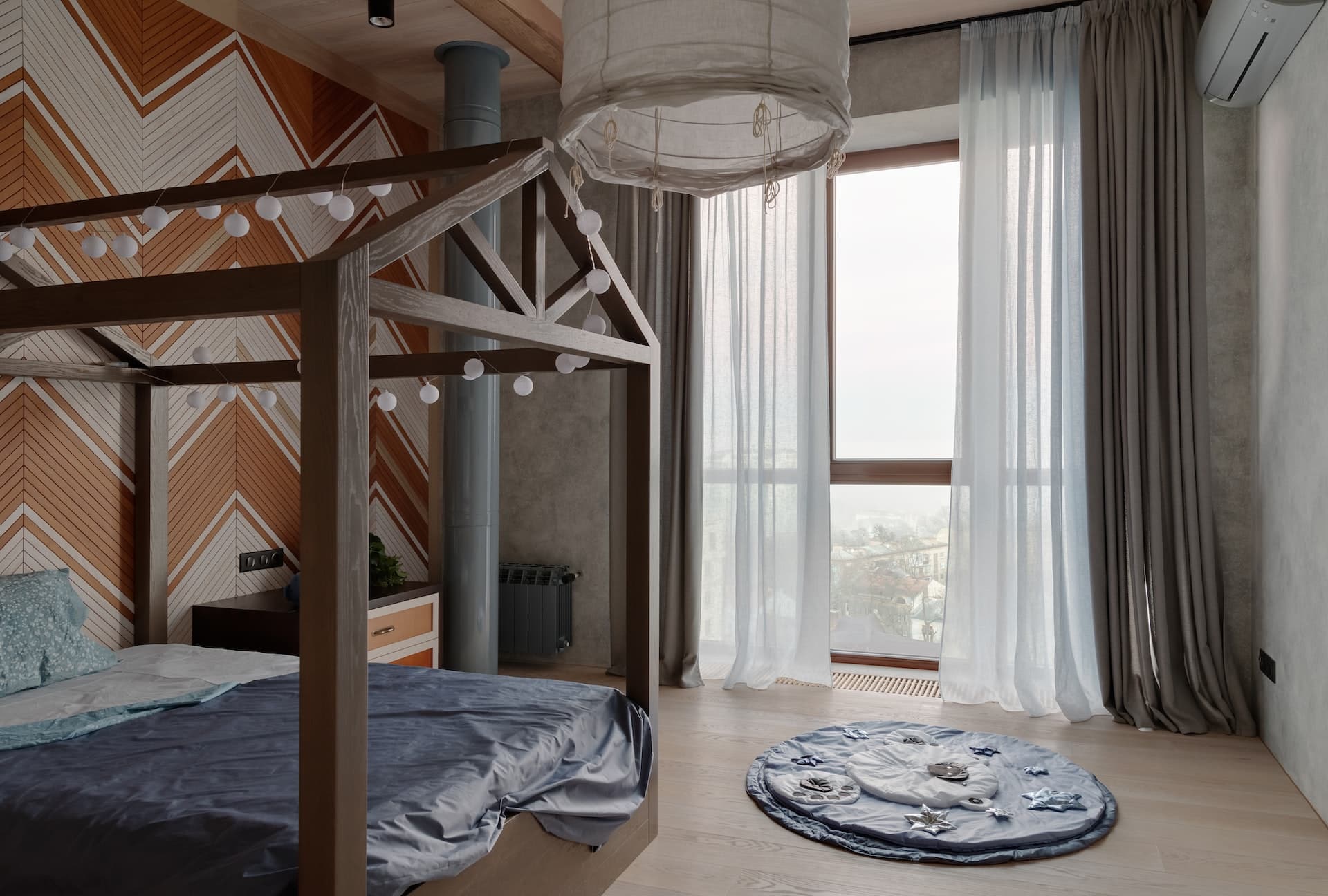
To achieve an atmosphere of lived-in luxury, look no further than the "puddle." This style involves adding an extra 6 to 12 inches to your floor-to-rod measurement, allowing the fabric to pool gracefully on the ground. As seen in this romantic bedroom setup, puddling works best with high-quality linens or heavy velvets that hold their shape. It’s an ideal choice for formal dining rooms or master suites where you want to evoke a sense of European grandeur. Keep in mind that this is a "low-traffic" look—beautiful to behold, but best kept away from pets and vacuum cleaners.
The Floating & Floor-Length Look: Clean & Contemporary
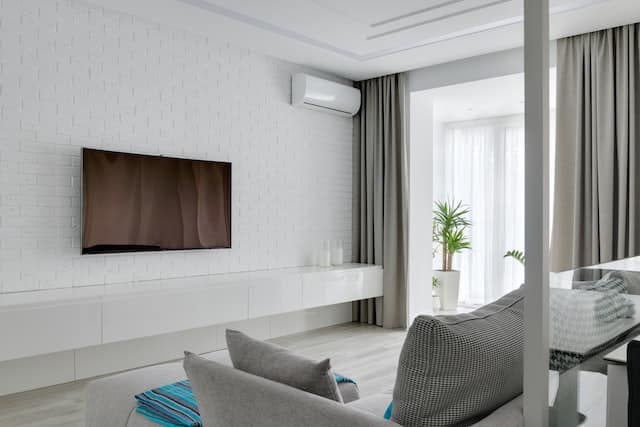
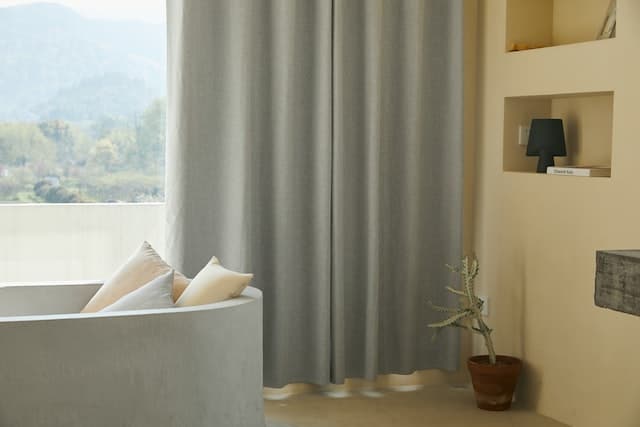
For the modern minimalist, precision is everything. The "floating" curtain hangs exactly 1/2 inch to 1 inch above the floor. This creates a clean, architectural line that makes cleaning a breeze and prevents the hem from wearing over time. In spaces with breathtaking scenery, such as the mountain-view lounge pictured above, a precise "breaking" drape—where the fabric adds exactly 1 cm to the floor length—ensures the curtains feel anchored and intentional. This subtle "kiss" of the floor provides enough weight to keep the panels straight without the maintenance of a full puddle.
The Modern Classic: Neutral Sophistication
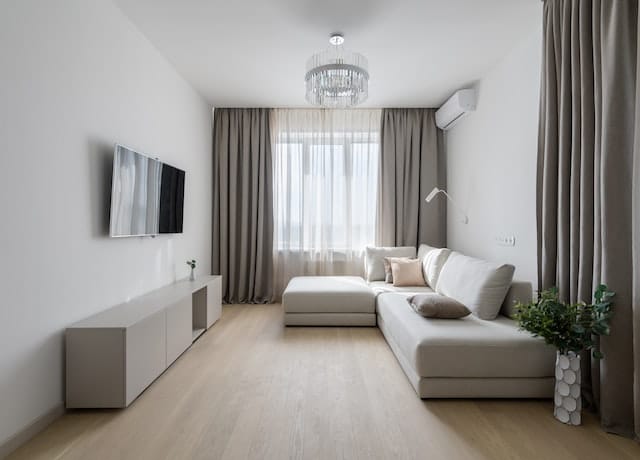
When working with neutral palettes and open-plan living areas, the goal is often to maximize the illusion of height. A pro-tip for measuring for custom curtains is to install your rod significantly higher than the window itself—typically 6 to 8 inches above the frame. By pairing this high-mount placement with a floor-skimming length, you draw the eye upward, making even standard ceilings feel like lofts. The result is a sophisticated, airy environment where the curtains act as a seamless extension of the architecture rather than a mere window covering.
The Short Drop: Functionality for Cozy Nooks
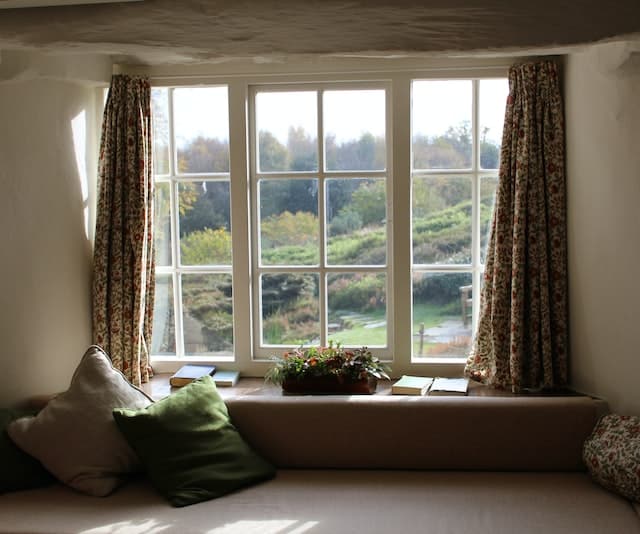
While floor-length is the gold standard for main living areas, certain architectural features demand a "short drop." Sill-length curtains or "cafe curtains" are essential for integrated window seats, kitchens, and bathrooms. As illustrated in this charming garden-view nook, a shorter length prevents the fabric from bunching against cushions or obstructing movement. When measuring for these, aim for the hem to sit 1/2 inch above the sill or, for a more traditional look, fall 2-4 inches below the sill (the "apron" length) to fully frame the window.
The Professional Blueprint: How to Measure Like a Pro
Mastering your curtain drop lengths requires more than just a tape measure; it requires a strategy for fullness and "stack back." To ensure your window treatments look bespoke and not skimpy, follow these professional guidelines:
- The 1.5x Fullness Rule: For a professional look, your total fabric width should be at least 1.5 to 2 times the width of the window. For example, a 280cm wide fabric panel is ideally suited to cover a maximum window width of 180cm once the "stack back" (the space the curtains take up when open) is accounted for.
- Rod Placement: Always measure from the top of the rod (or the eyelet of the rings) to the floor, not from the top of the window frame.
- Level Check: In older homes, floors are rarely perfectly level. Measure the drop at both the left, center, and right sides of the window. Use the shortest measurement for floating looks and the longest for puddling looks.
- Standard Curtain Length Guide:
- Floating: Rod-to-floor minus 1 inch.
- Breaking: Rod-to-floor plus 1/2 inch.
- Puddling: Rod-to-floor plus 6–12 inches.
By choosing the right drop, you aren't just covering a window—you're defining the very character of your home. Whether you opt for a sleek float or a dramatic puddle, remember that precision is the ultimate luxury.