In the pantheon of contemporary design, true luxury is no longer defined by opulence, but by the seamless integration of heritage, craftsmanship, and the natural world. Olson Kundig’s Hawaii Residence—specifically the "Office Hut"—stands as a testament to this shift, offering a sophisticated reimagining of the workspace as a meditative sanctuary.
The Pavilion Aesthetic: Redefining the Workspace
In an era where the lines between professional labor and personal reflection have blurred, Olson Kundig proposes a radical return to the pavilion. This is not merely a home office; it is a high-performance architectural instrument. Positioned along a deliberate axis that culminates in a "Buddha rock," the structure functions as a rhythmic focal point within the lush Hawaiian topography. By utilizing glass walls and a slender wooden frame, the design strips away the traditional barriers of a "room," transforming the act of working into an immersive dialogue with the landscape.
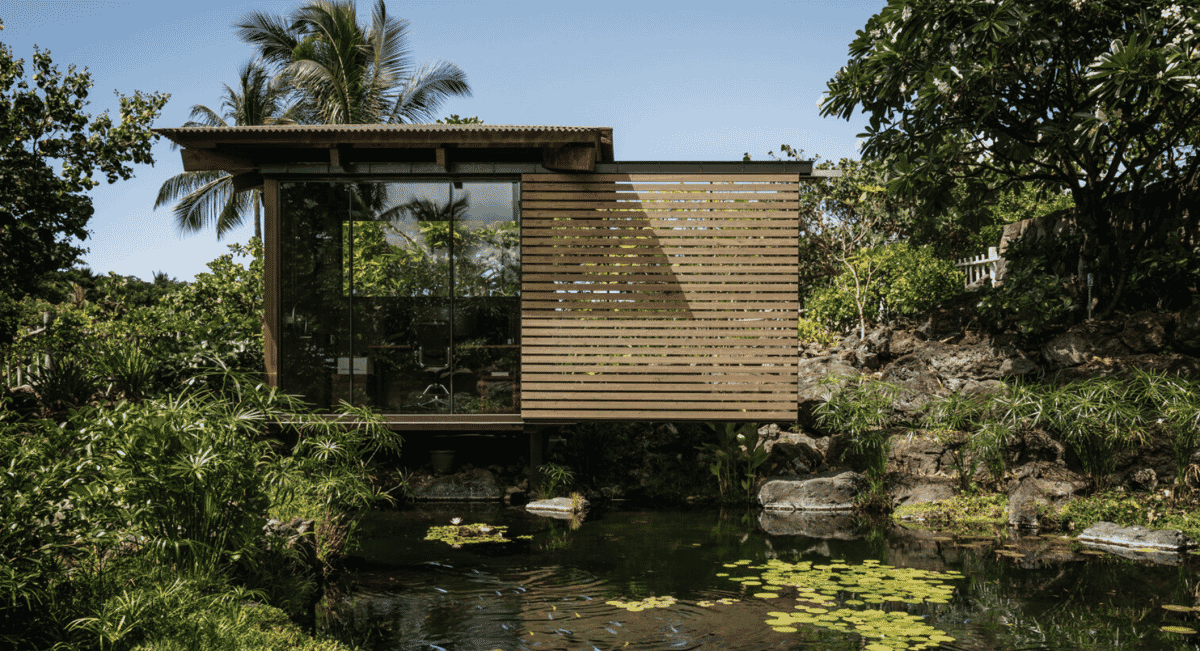
The "hut" concept draws inspiration from indigenous Polynesian structures but elevates the vernacular through a lens of modern precision. Every line is intentional, every shadow curated. To occupy this space is to experience a curated stillness—a luxury that is increasingly rare in our hyper-connected world.
Grounded in Nature: Lava Stone and Boardwalks
The architectural narrative begins at the feet of the resident. Rather than imposing a heavy footprint upon the delicate island ecosystem, the residence employs elevated boardwalks that float above the terrain. This design choice is both aesthetic and ethical, allowing native ferns and palms to flourish undisturbed beneath the structure.
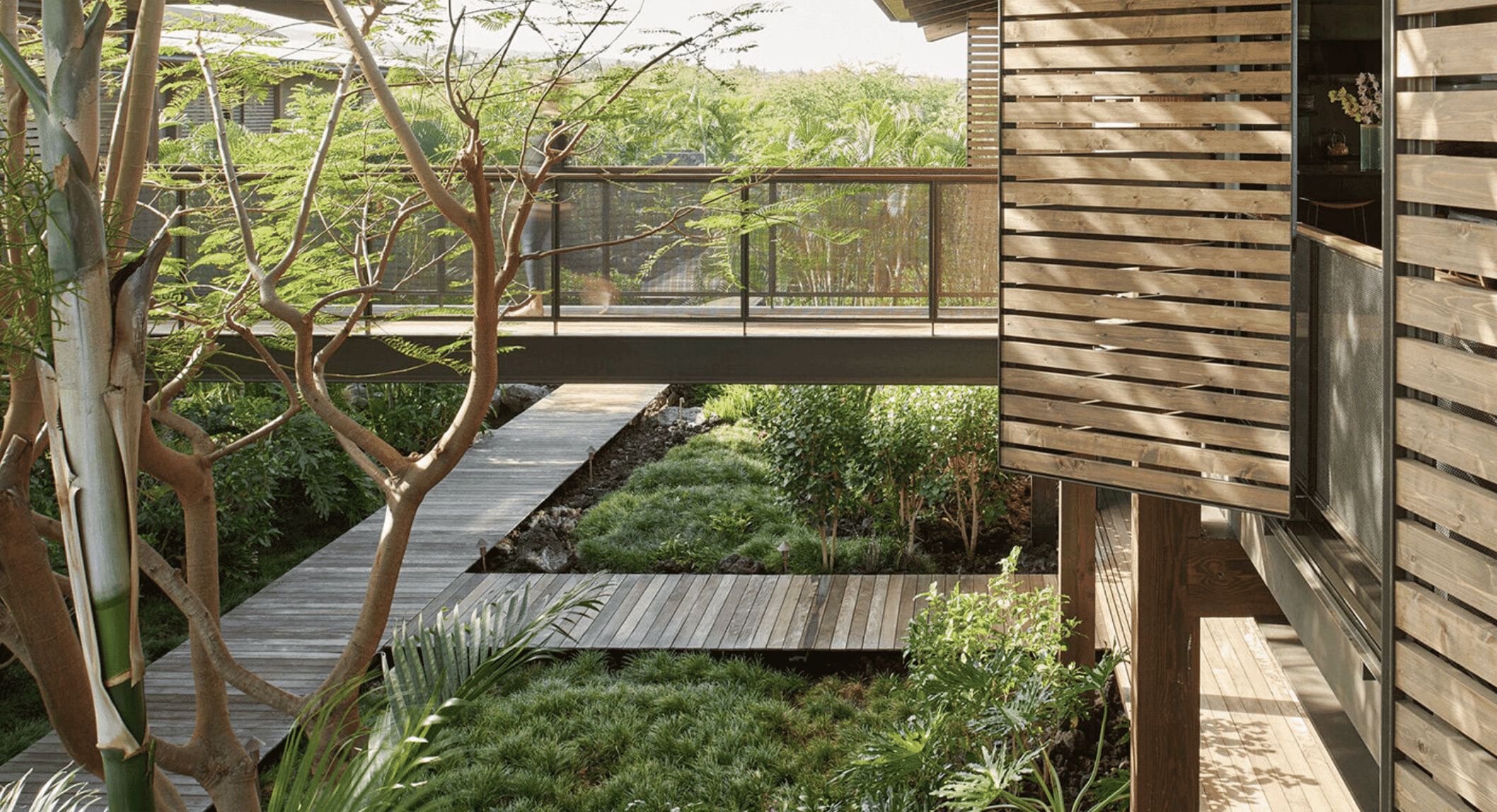
The materiality here is a study in contrasts. Charcoal-hued lava stones provide a primordial, grounded weight that anchors the ethereal lightness of the timber. This interplay of "weight" and "flight" is a hallmark of Olson Kundig’s genius. For the discerning homeowner, these boardwalks serve as a transitional ritual—a physical movement away from the domestic sphere and into a state of heightened focus.
Kinetic Architecture: Mastering the Climate
Olson Kundig is renowned for "kinetic architecture," and the Hawaii Residence is perhaps the ultimate expression of this philosophy. In a tropical climate, luxury is synonymous with air and light. The residence utilizes a sophisticated system of movable wood louvers and massive, 6x15 foot opening roof panels. These panels provide a staggering 90 square feet of natural ventilation, allowing the building to "breathe" in response to the trade winds.
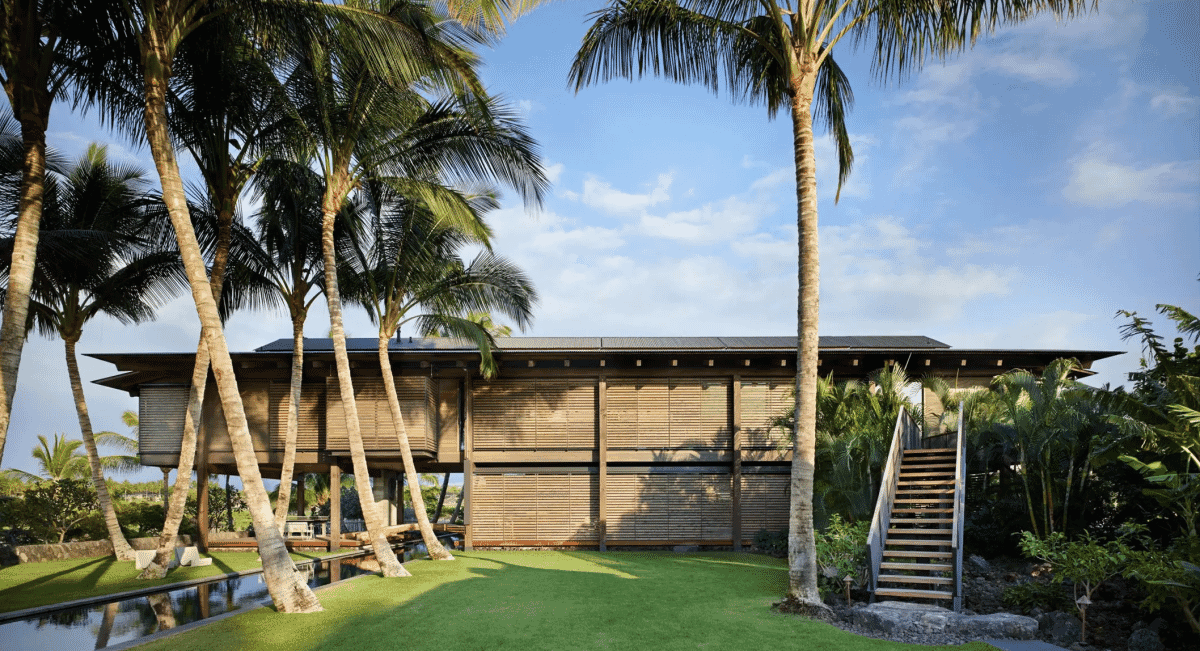
This biophilic engineering eliminates the need for aggressive air conditioning, relying instead on the wisdom of the environment. The slatted wood walls filter the intense Hawaiian sun into a soft, rhythmic pattern of light and shadow, creating a visual texture that changes throughout the day. It is a masterclass in sustainable cooling, where innovation meets the organic.
Interior Serenity: A Refuge for Introspection
Stepping inside the residence, one is immediately enveloped by the warmth of honey-toned woods. The interior design avoids the cold minimalism of typical modernism, opting instead for a tactile, artisanal richness. Exposed wood beams draw the eye upward, mirroring the verticality of the surrounding palms, while the furniture is curated with a focus on form and ergonomic comfort.
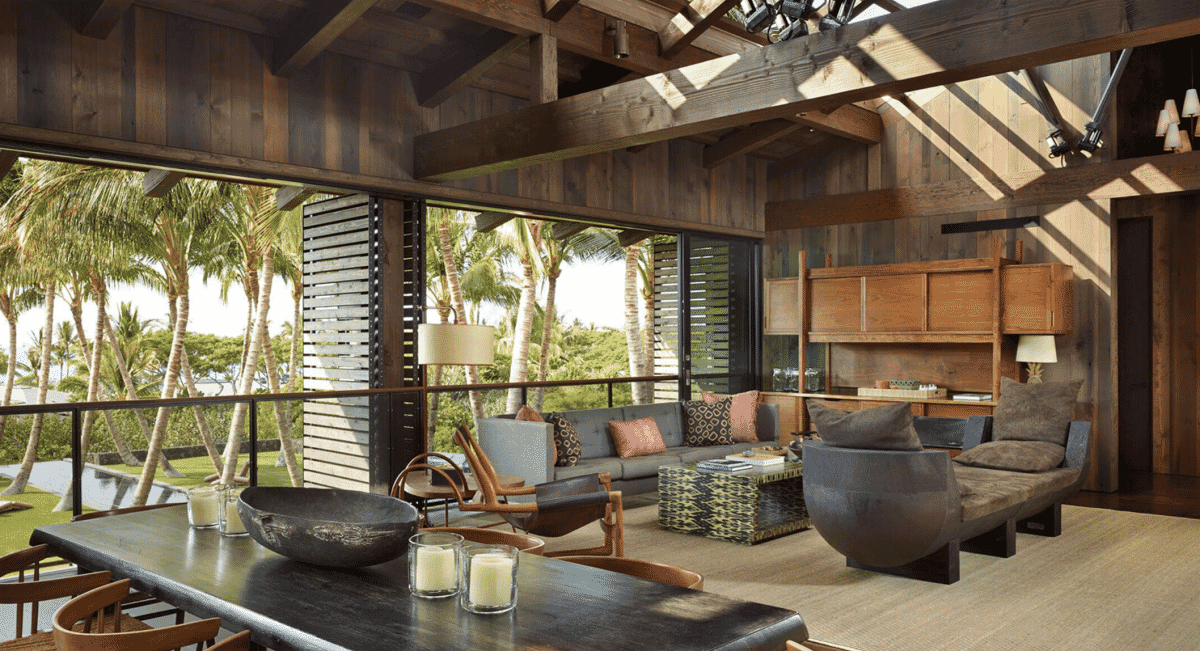
The space is designed to be a "protected refuge." Large glass apertures frame the tropical foliage like living canvases, ensuring that even in moments of deep work, the presence of the outside world remains a calming constant. It is a space that demands presence, fostering the kind of deep, creative thinking that only such a deliberate environment can provide.
The Biophilic Soul: Working Above the Koi
Perhaps the most evocative feature of the Office Hut is its profound connection to the element of water. The workspace is strategically positioned over a tranquil koi pond, where lily pads and the rhythmic movement of fish create a natural "white noise" that is far more effective than any digital alternative.
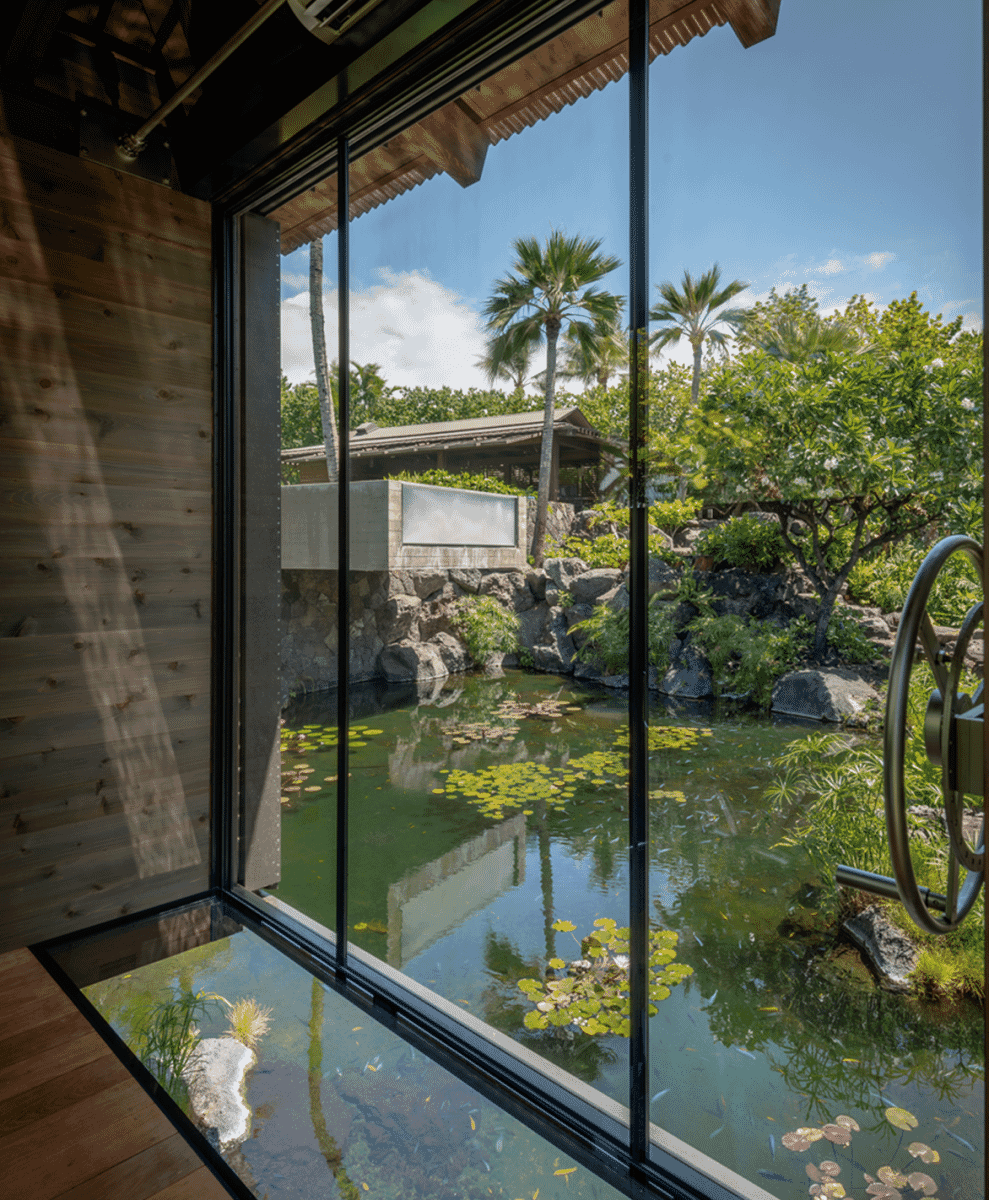
A cantilevered glass floor section allows the inhabitant to look directly down into the water, creating a sensation of floating above the pond. This design element serves as a literal and metaphorical grounding mechanism. By bringing the biophilic soul of the island into the very floorboards of the office, Olson Kundig ensures that the resident remains tethered to the natural rhythms of life—a vital necessity for innovation and business leadership.
Innovation is rarely the result of force; it is the result of clarity. By designing for the environment rather than against it, Olson Kundig has created a workspace that doesn't just house a business—it nurtures the visionary mind.